
Schedule Service
Snell Automotive

Why Your Brakes Are Squeaking, Grinding, or Vibrating

Your car said something. You heard it when you slowed for the light at Poplar and Highland — a squeak, or a grind, or a shudder through the pedal. You've heard it a few times now and you're wondering if it's serious. It might be, and it might not be — but the sound itself is a diagnostic. Different noises mean different things, and the difference matters for what it costs to fix and how long you have before it becomes urgent.

Here's what each type of brake noise actually means.

Squeaking

The most common brake noise, and the one with the widest range of causes.

Wear indicator squeal is designed in. Most brake pads include a small metal tab that contacts the rotor when the pad wears down to approximately 2–3mm. It makes a high-pitched squeak to tell you the pad is nearly spent. This sound typically appears when braking lightly and goes away under hard brake pressure. If this is what you're hearing, you need pads soon — but you have some time. Not weeks, but not emergency-stop-now either.

Morning squeak is normal and harmless. Overnight, surface rust forms on cast iron rotors. The first few stops of the day scrub it off. The sound is a light squeal that disappears after a minute of driving. If it's gone by the time you reach the end of your street, it's fine.

Glazed pads or rotors create a persistent, high-pitched squeal that doesn't go away after the first few stops. Glazing happens when brakes run too hot repeatedly — common in Memphis stop-and-go on I-40 in summer — and the pad material hardens into a smooth, shiny surface with reduced friction. This doesn't fix itself. It requires resurfacing or replacement.

"The squeal that worries me is the one that changes pitch or volume when you press the pedal harder. The wear indicator is supposed to squeak lightly when you're coasting. If pressing harder makes it louder instead of quieter, something else is going on — a loose shim, a caliper issue, something beyond just worn pads."

Greg Baumgarten, Lead Technician — Snell Automotive

Grinding

Grinding is the sound of metal on metal. The pad friction material is gone, and the steel backing plate is contacting the rotor directly. This is past the warning stage. Every stop is scoring the rotor surface. What would have been a pad replacement ($149–$249/axle) is becoming a pad-plus-rotor replacement ($299–$499/axle), and if you continue long enough, it can damage the caliper.

The grinding may also come from debris — a small stone lodged between the pad and rotor. This produces a sharp, consistent grinding that may resolve after a few stops if the stone dislodges. If it doesn't go away within a day of driving, bring it in. You can't tell from inside the car whether it's debris or worn-through pads.

A grinding or growling sound that appears without pressing the brake pedal — constant when rolling — often points to a wheel bearing rather than the brake system. The bearing sits inside the hub; when it fails, it makes a sound that varies with speed, not with brake application.

Vibration

Brake vibration — a pulsing or shudder felt through the pedal or steering wheel when braking — almost always means warped rotors.

Rotors warp when they experience uneven thermal expansion. Heavy braking on I-240, then sitting at a light with the brake held down while the rotor is hot, can cause uneven cooling that warps the surface. The pad then contacts a high spot, then a low spot, then a high spot — and you feel that as a rhythmic pulse.

Memphis summer heat accelerates this. When ambient temperatures are 95°F and road surface is 140°F, brakes are already running hotter than in cooler climates. The thermal margin before warping occurs is smaller.

Vibration in the steering wheel specifically — rather than the pedal — during braking usually points to a front rotor issue. Vibration felt through the seat or floor, but not the wheel, often points to rear rotors.

Brake Fluid and the Spongy Pedal

Not a noise, but worth including here: if your brake pedal feels soft, spongy, or travels farther than usual before the car responds, you may have air in the brake lines or moisture-contaminated brake fluid. Memphis humidity causes brake fluid to absorb moisture faster than in drier climates. Contaminated fluid boils at a lower temperature, which is why brake fade — the pedal going soft after repeated hard stops — is more common in summer here than drivers expect.

A brake fluid flush is part of any full brake service we do. If you've never had one and the car has more than 30,000 miles, it's worth asking about.

What to Do

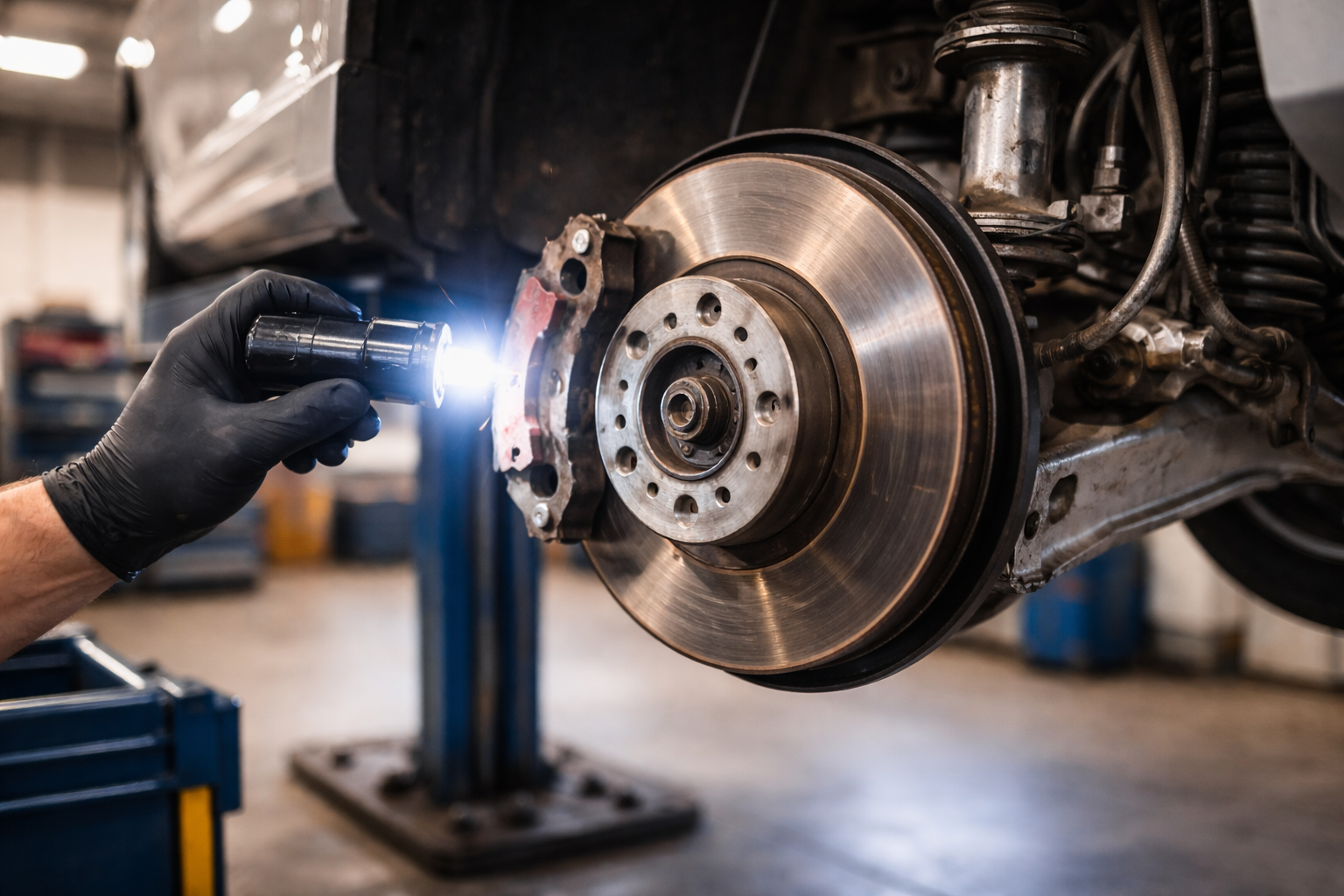
A free brake inspection takes about 20 minutes. We pull the wheels, measure pad thickness, inspect the rotor surface, check caliper function, and look at the hoses. We'll tell you what we found and what needs to happen — whether that's "come back in 10,000 miles" or "this needs to happen this week."

Brake noise by itself isn't always urgent. What makes it urgent is ignoring it until the pads are gone.

Pricing at Snell

  • Free brake inspection
  • Brake pads (per axle): $149–$249
  • Pads + rotors (per axle): $299–$499
  • Brake fluid flush: ask for current pricing

You heard something. Trust it.

Sources & Further Reading

Schedule a free brake inspection

call (901) 388-7390

— we'll tell you what we actually found.

Article by Sherry Snell

Sherry Snell

Sherry Snell is the owner and office manager of Snell Automotive, a family-owned auto repair shop serving Memphis since 1974. With over 30 years of experience, she oversees daily operations, customer relations, scheduling, and office management — ensuring every customer receives honest, reliable service. Known for her attention to detail and commitment to transparency and quality, Sherry is a trusted and familiar presence who plays a vital role in the continued success of Snell Automotive.

Snell Automotive

Get in Touch