
Schedule Service
Snell Automotive

How Should You Prepare Your Car for a Summer Road Trip?

Summer in Memphis is serious. The kind of heat that radiates back up off the asphalt, that makes the inside of a parked car feel like an oven within minutes, that pushes engine temperatures higher before you've even reached the interstate. When you're adding a six-hour drive to Gulf Shores or a weekend in Nashville on top of that baseline — with a full car, a loaded trunk, and the AC running the entire time — your vehicle is doing real work.

Most summer breakdowns are preventable. Not the dramatic kind that makes for a good story, but the kind that actually happens: the car that overheats at mile marker 70 on I-40 because the coolant was two years past its service life. The tire that goes flat outside of Tupelo because the pressure was five pounds low when the trip started and highway heat took it the rest of the way. The battery that won't restart at a gas station in Olive Branch because it was marginal going in and the summer heat finished it off.

Here's what to check before you leave.

Engine Cooling

Sustained highway driving in July is the worst-case scenario for a cooling system. It runs at full load for hours without the recovery breaks that daily driving allows. Check the coolant level in the overflow reservoir when the engine is cold. More importantly, have the coolant tested — not just topped off. Coolant has a service life, and degraded coolant loses its ability to transfer heat efficiently. If yours is more than two or three years old, a flush and refill before a summer road trip is money well spent.

Squeeze the radiator hoses. They should feel firm but pliable. Hard, cracked, or spongy hoses are likely to fail under thermal stress. Check the radiator cap seal while you're there — a weak cap lowers the system's pressure rating and drops the effective boiling point of your coolant.

Tires

Heat is a tire's enemy. An underinflated tire generates excess heat as the sidewalls flex — add summer pavement temperatures and four hours of highway speed and you're in blowout territory. Check tire pressure cold, before the car has moved that morning, against the PSI on the door jamb sticker. Add for load if you're carrying a full passenger load or heavy cargo.

Look at the tread depth with a quarter: if Washington's head is fully visible, the tires are marginal for wet-road performance. Sidewall cracking from UV exposure is common on Memphis cars that sit outside — if the sidewalls look spider-webbed, the tires may be aged out regardless of tread depth.

"In July, the pavement on I-40 between here and Jackson can hit 150 degrees. That's not an exaggeration. Tires are made to handle that, but not if they're already borderline. I always say: summer is when the stuff that's been getting by all year finally gets found out."

Greg Baumgarten, Lead Technician — on summer tire failures

Battery and Electrical

Most drivers think of battery failure as a winter problem — cold weather, sluggish cranking. But summer heat is equally hard on batteries, just in a different way. Heat accelerates the internal chemical reactions inside the battery, which shortens its life. A battery that's two or three years into a four-year service life will often fail in its first summer heat wave.

We offer free battery testing. If yours is showing reduced cold cranking amps or is running at the edge of its voltage range, replacement before a road trip beats a replacement call from a gas station parking lot in Covington.

Air Conditioning

Beyond comfort, your AC affects fuel economy and driver alertness on long drives. A system that's low on refrigerant will run the compressor harder, affecting engine load and fuel consumption. If the air coming out is less cold than it used to be, or if the system cycles on and off erratically, have it inspected before the trip. A refrigerant recharge typically runs $80–$130 and makes a noticeable difference on a five-hour summer drive.

Fluids, Belts, and Brakes

A full summer prep covers more than the headliners:

  • Engine oil: if you're within 1,500 miles of your next change, do it before the trip — fresh oil handles heat better
  • Brake fluid: absorbs moisture over time, which raises its boiling point vulnerability; check level and condition
  • Serpentine belt: drives the alternator, AC compressor, and water pump; cracking or glazing is a failure waiting to happen
  • Wiper blades: summer thunderstorms along I-40 are sudden and heavy; blades run $19.95–$34.95 per pair installed
  • Cabin air filter: a clogged filter forces the AC to work harder; takes two minutes to swap

Pack for the What-If

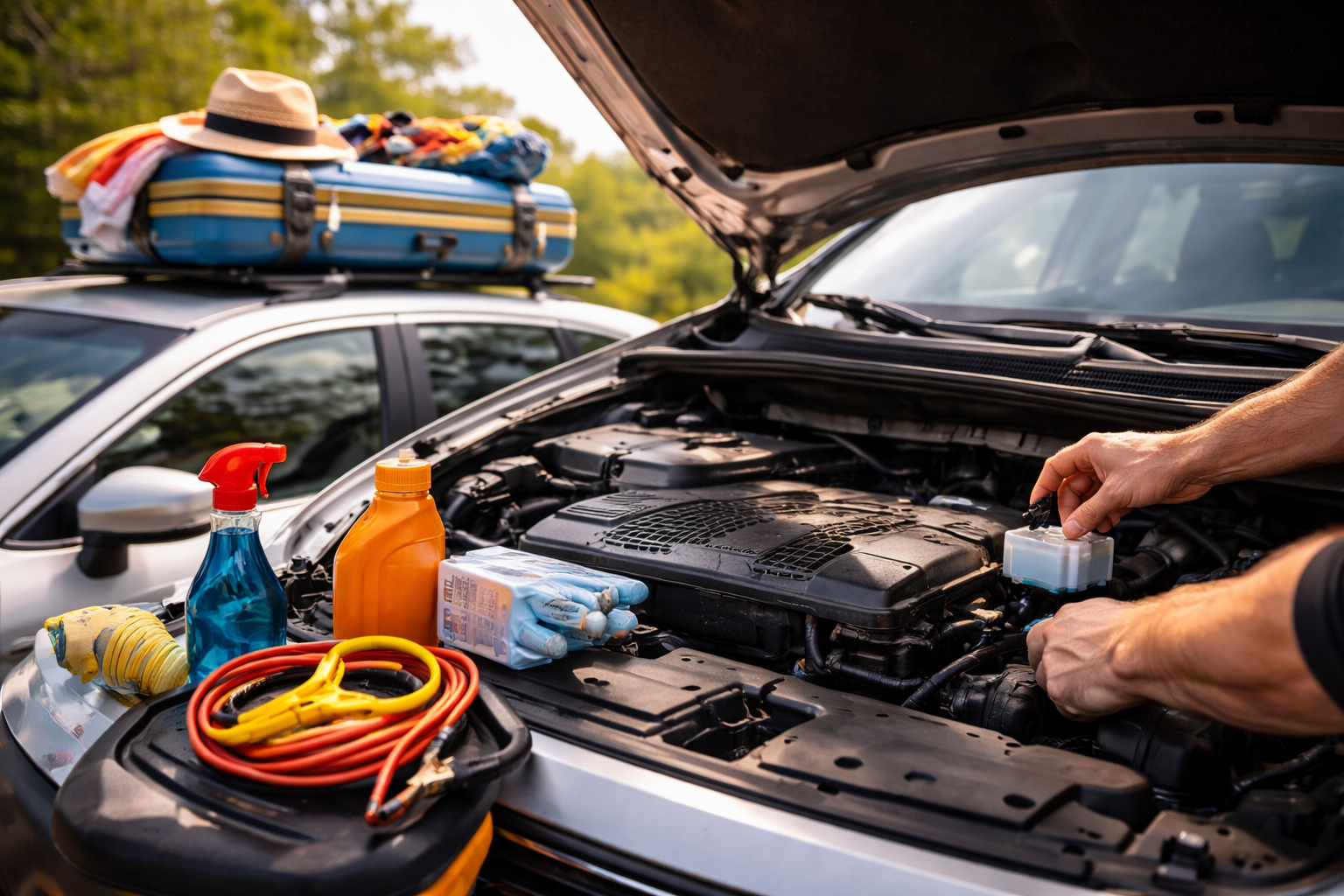
Even a perfectly prepared car benefits from a few basics in the trunk: a gallon of distilled water (never open a hot radiator, but if you must, cool it first), a portable tire inflator, jumper cables or a jump pack, and a charged phone with roadside assistance in your contacts. AAA recommends a basic roadside kit for any trip over 100 miles.

Get the Full Check Before You Go

Our summer pre-trip inspection covers all of the above for $49.95. It takes about 45 minutes and leaves you with a clear picture of what your car is carrying into the trip. We'll tell you what's solid, what's marginal, and what genuinely needs attention before you leave Memphis.

Sources & Further Reading

Schedule your pre-trip inspection online or call us at (901) 388-7390. We've been keeping Memphis drivers on the road since 1974.

Article by Sherry Snell

Sherry Snell

Sherry Snell is the owner and office manager of Snell Automotive, a family-owned auto repair shop serving Memphis since 1974. With over 30 years of experience, she oversees daily operations, customer relations, scheduling, and office management — ensuring every customer receives honest, reliable service. Known for her attention to detail and commitment to transparency and quality, Sherry is a trusted and familiar presence who plays a vital role in the continued success of Snell Automotive.

Snell Automotive

Get in Touch