
Schedule Service
Snell Automotive

How Worn Suspension and Brakes Increase Stopping Distance

Most Memphis drivers think braking is simple: press the pedal, car stops. But the distance between "pedal down" and "car stopped" is determined by a chain of systems working together — brakes, suspension, tires, and steering geometry. When any link in that chain weakens, stopping distance grows. And on I-240 at rush hour, every extra foot matters.

At Snell Automotive, we've been working on Memphis cars since 1974. The combination of summer heat, stop-and-go traffic, and roads that challenge every suspension component means we see this problem often. Here's what's actually happening when your car takes longer to stop than it used to.

Brakes Are Only Half the Equation

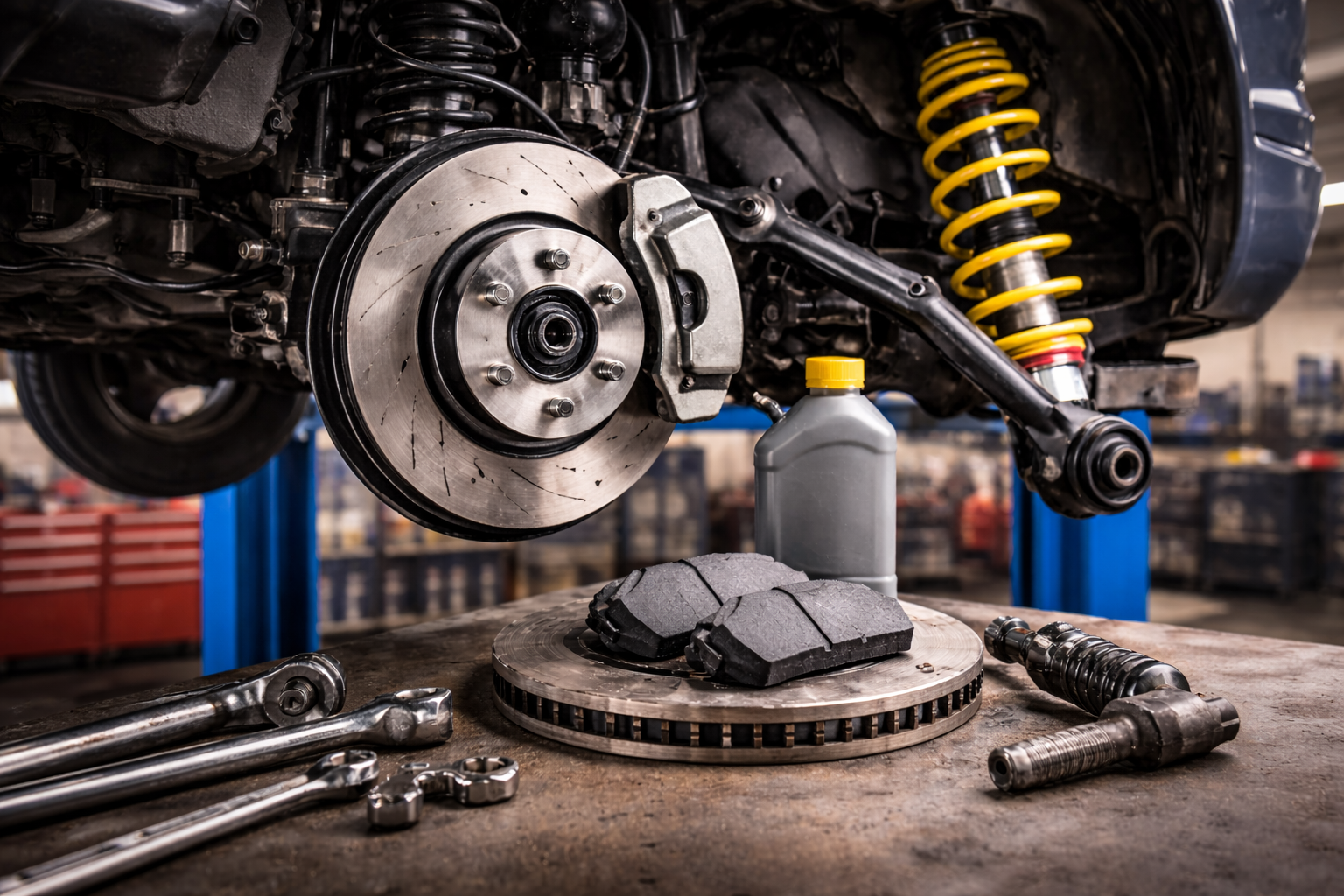
Your brakes generate the stopping force. Your suspension keeps the tires in contact with the pavement so that force has somewhere to go. When shocks or struts are worn, the front of the car dips hard under braking — a phenomenon called "nose dive." During that dive, weight transfers forward faster than the suspension can manage, reducing rear tire grip and extending the stop.

Worn ball joints and tie rods compound this. If steering geometry is off, even a well-functioning brake system can't stop the car in a straight line. You've felt it: the car pulls slightly left or right under hard braking. That's a handling problem becoming a braking problem.

"People bring a car in saying the brakes feel soft, and I check the pads — they're fine. Then I check the struts and they're completely shot. The car is diving so hard under braking that the pads can't do their job. You can't separate these systems. They're one thing."

Greg Baumgarten, Lead Technician — 20+ years at Snell Automotive

What the Numbers Look Like

The National Highway Traffic Safety Administration (NHTSA) has documented that worn suspension components can increase stopping distance by 10–15% compared to properly maintained vehicles. At 60 mph, that's roughly 15–22 additional feet before the car stops. That's the length of a sedan. It's the difference between a close call and a collision.

Memphis summer heat adds another variable. Brake fluid absorbs moisture over time, and our humidity accelerates that process. Moisture-contaminated fluid boils at a lower temperature — meaning repeated hard stops on I-40 during August can cause brake fade even with pads that look fine on inspection. The fix is a brake fluid flush, which we do as part of any full brake service.

The Components Most Likely to Blame

Shocks and struts: Control how quickly weight transfers under braking. When worn, nose dive is excessive and tire contact pressure is uneven.

Brake pads and rotors: The obvious candidates. Pads worn below 2–3mm dramatically reduce clamping force. Warped rotors reduce the surface area available for friction.

Brake fluid: Often overlooked. If it's been more than two years since a flush, moisture contamination is likely. This affects pedal feel and fade resistance.

Tie rods and ball joints: Affect how straight the car tracks under braking. Play in these components means braking force isn't applied symmetrically across both front wheels.

Tires: Old, underinflated, or unevenly worn tires reduce grip. Suspension problems cause the uneven wear. Both make stopping worse.

Signs Your Stopping Distance Has Increased

This one is hard to self-diagnose because the change is gradual. You adapt to the car's behavior without realizing it. A few things to notice:

  • You find yourself braking earlier than you used to at familiar intersections
  • The pedal feels softer or spongy compared to how it used to feel
  • The car dips forward sharply when you brake hard
  • The car pulls to one side under braking, even slightly
  • Braking feels less effective in the rain than it used to

Any of these is worth a free inspection. We'll check pads, rotors, fluid condition, and suspension geometry — not just the part you're asking about.

What Service Costs at Snell

A free brake inspection is always the starting point. From there:

  • Brake pads (per axle): $149–$249
  • Pads + rotors (per axle): $299–$499
  • Struts (per pair): $349–$599
  • Wheel alignment: $89.95

We don't charge to look. We tell you what we find and what it will cost before we touch anything.

Sources & Further Reading

Schedule a free brake inspection or call (901) 388-7390 to talk through what you're noticing.

Article by Sherry Snell

Sherry Snell

Sherry Snell is the owner and office manager of Snell Automotive, a family-owned auto repair shop serving Memphis since 1974. With over 30 years of experience, she oversees daily operations, customer relations, scheduling, and office management — ensuring every customer receives honest, reliable service. Known for her attention to detail and commitment to transparency and quality, Sherry is a trusted and familiar presence who plays a vital role in the continued success of Snell Automotive.

Snell Automotive

Get in Touch