
Schedule Service
Snell Automotive

Should You Ignore a Warning Light Before a Road Trip?

You're packed, the kids are in the car, and you're about to pull onto I-40 toward Nashville when a light blinks on. Maybe it's been on for a week. Maybe it just showed up this morning. Either way, you're now making a decision you didn't plan to make — and making it in the driveway is much better than making it outside of Jackson, Tennessee, on a Sunday afternoon.

Dashboard warning lights are not all created equal. Some are genuinely urgent. Others give you a window. Knowing the difference before a road trip isn't just smart — it's the thing that keeps a small repair from becoming a five-hour breakdown on the shoulder of a federal highway.

The Lights That Mean Stop Now

A handful of warning lights should end the trip before it starts. If your temperature gauge is climbing toward red, your engine is already at risk of serious damage — pull over, let it cool, and don't restart until you understand why it's overheating. The oil pressure warning light is similarly non-negotiable. Low oil pressure starves engine components of lubrication; driving on it for even a few miles can cause catastrophic internal damage.

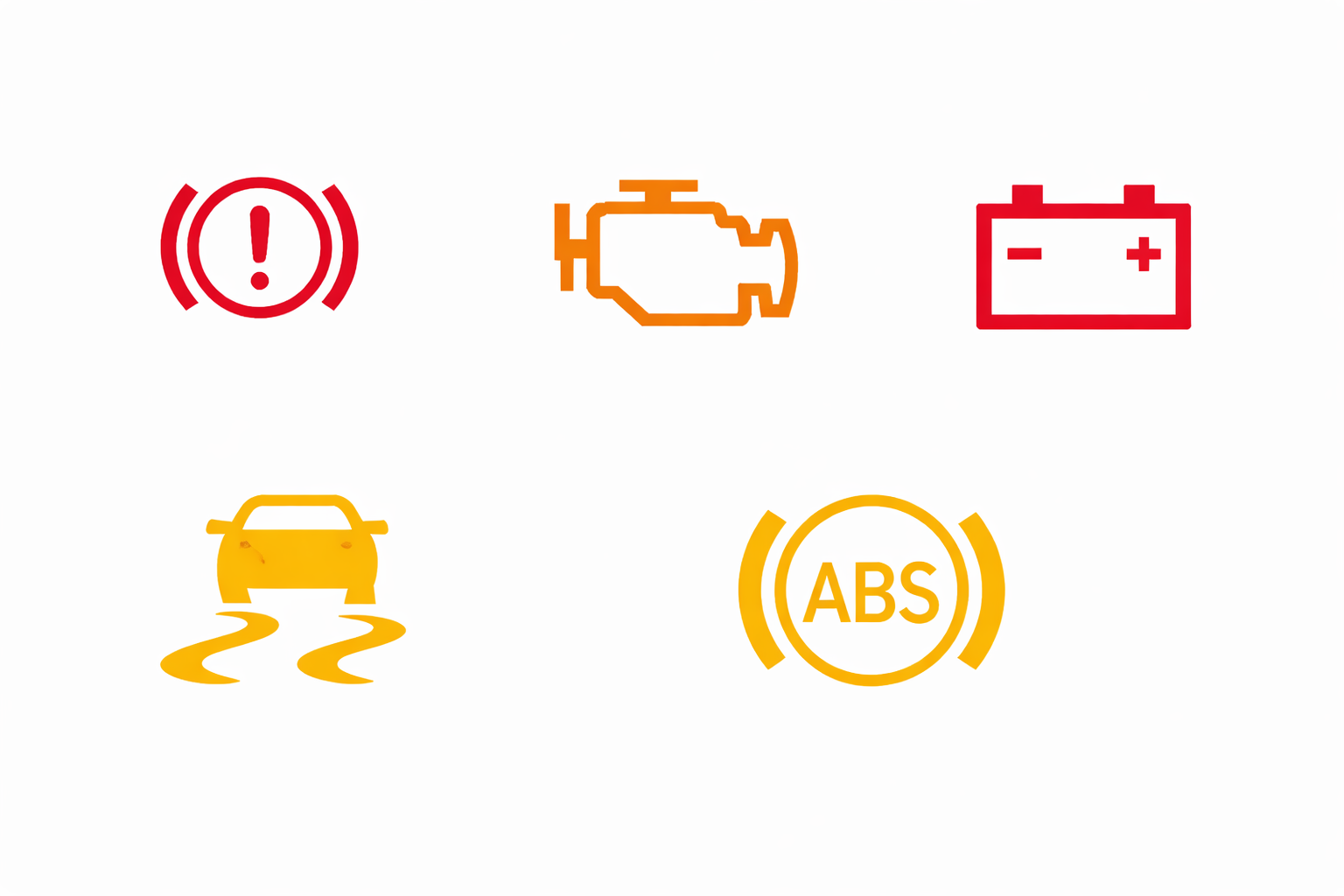
Battery warning light on while the car is running isn't a battery problem — it's typically the alternator. The alternator charges the battery while you drive. If it's failing, you may have thirty minutes of drive time before everything electrical goes dark. That includes your fuel pump on many modern vehicles.

The brake warning light deserves a moment too. If it's on and your parking brake is fully released, have your brake fluid level checked immediately. Fluid loss often signals a leak in the hydraulic system — which means your stopping ability is compromised in ways you can't feel yet.

"Memphis summers are brutal on cooling systems. I've seen cars come in after a road trip that looked fine on the outside but had coolant that hadn't been changed in four years. The engine was running hot the whole time — the driver just didn't know it until the gauge spiked on I-55 heading south."

Greg Baumgarten, Lead Technician — 20+ years at Snell Automotive

Lights That Deserve Attention, Not Panic

The check engine light is the most misunderstood warning on any dashboard. It can mean a loose gas cap, an oxygen sensor reading slightly off, or something genuinely serious — and you can't tell from the light itself. A quick OBD-II scan (we offer these at no extra charge during pre-trip inspections) pulls the stored fault code and tells you exactly what the computer flagged. That scan takes five minutes and removes all the guesswork.

TPMS — the tire pressure monitoring system — will trigger when any tire drops more than 25% below its recommended pressure. That's about 8–10 PSI for most passenger cars and trucks. On a long summer drive out of Memphis, tires heat up and pressure rises, which can mask a slow leak. Check pressures cold the morning before you leave, including the spare.

The service due or oil life indicator is worth addressing before a road trip even if you're not at zero percent. If you're within 1,000 miles of your next interval, do it now. Fresh oil handles heat better, and heat is exactly what your engine faces at highway speeds in July.

What a Pre-Trip Inspection Actually Covers

Our

pre-trip inspection runs $49.95 and takes about 45 minutes. It covers the systems most likely to fail on a long drive: cooling, battery and charging, tire condition and pressure, belts and hoses, brakes, fluid levels, and lights. If a warning light is on when you bring it in, we scan the codes as part of the process.

The goal isn't to find reasons to do more work — it's to give you an honest picture of what your car is carrying into a long-haul drive. Some things we find can wait. Some things need to be fixed before you leave. We'll tell you which is which.

According to AAA, vehicle breakdowns on American highways spike during summer travel months, with mechanical failures — not accidents — accounting for the majority of roadside service calls. A warning light is your car's way of raising its hand before something becomes a crisis.

Before You Leave Memphis

If a light is on, don't silence it with tape and hope. Bring it in. A pre-trip inspection gives you real information about what's going on under the hood — and that information lets you make a real decision. The repair may be minor. It may be something you can defer. But you'll know, and knowing is the difference between a good trip and a bad one.

Sources & Further Reading

Schedule a pre-trip inspection online or call us at (901) 388-7390. We're on Elvis Presley Boulevard and we've been keeping Memphis drivers on the road since 1974.

Article by Sherry Snell

Sherry Snell

Sherry Snell is the owner and office manager of Snell Automotive, a family-owned auto repair shop serving Memphis since 1974. With over 30 years of experience, she oversees daily operations, customer relations, scheduling, and office management — ensuring every customer receives honest, reliable service. Known for her attention to detail and commitment to transparency and quality, Sherry is a trusted and familiar presence who plays a vital role in the continued success of Snell Automotive.

Snell Automotive

Get in Touch