
Schedule Service
Snell Automotive

What a Check Engine Light Really Means (And When It’s Serious)

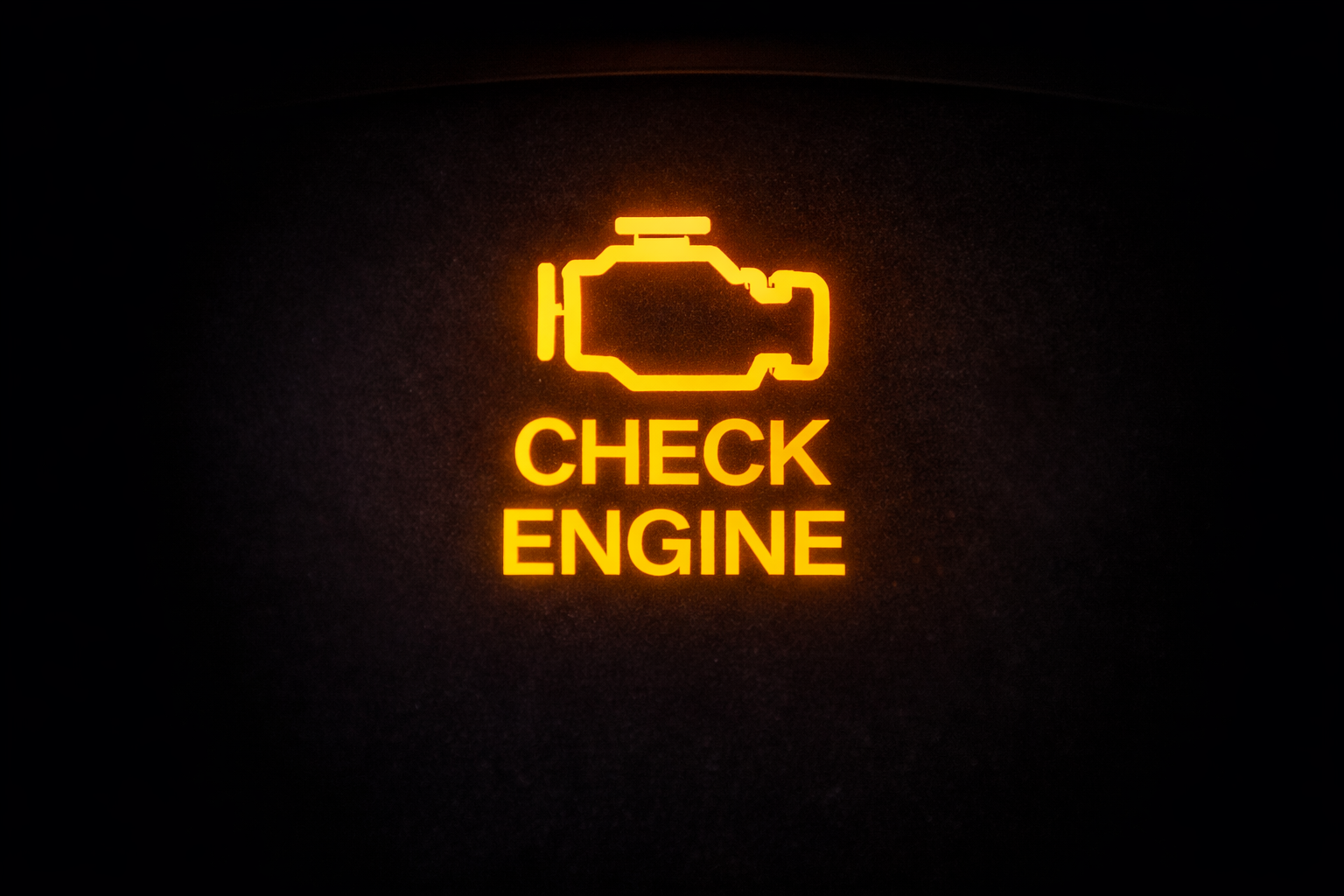
The check engine light is the automotive equivalent of a tap on the shoulder in a crowded room. It could mean something serious just happened. It could mean a sensor has been tracking a developing problem for weeks. Or it could mean your gas cap isn't fully tightened and the evaporative system threw a loose-cap code at 6 AM on a Tuesday. The light doesn't tell you which one — that's the job of the diagnostic.

What it doesn't mean is that you should cover it with a piece of tape and hope it goes away.

Why the Light Is On: The Short Version

Your car's onboard diagnostic system — OBD-II in any vehicle made after 1996 — runs continuous and readiness tests across hundreds of parameters. Sensors monitor oxygen content in the exhaust, fuel trim, ignition timing, transmission temperatures, emissions control systems, and dozens of other values. When any reading falls outside the acceptable range, the system logs a diagnostic trouble code (DTC) and illuminates the check engine light.

The code is a starting point, not a diagnosis. A P0420 code (catalyst efficiency below threshold) could mean a failing catalytic converter — or it could mean an oxygen sensor that's giving a bad reading, or an exhaust leak upstream of the sensor that's skewing the data. A code tells you what system is reporting a problem. A technician determines why.

Steady vs. Flashing: This Matters

The two modes of the check engine light are not equivalent in urgency.

A steady check engine light means the system has logged a fault. Drive it in — but drive it in. It's telling you something needs attention, not that something is actively failing right now. Schedule a diagnostic and get it read within the week.

A flashing check engine light means an active misfire is occurring severe enough that unburned fuel may be damaging your catalytic converter in real time. Pull over if it's safe. Call us. Driving a flashing check engine light across Memphis is a decision that can turn a $400 ignition repair into a $1,400 catalytic converter replacement.

"I've had people come in after driving for two weeks on a flashing light. The car barely made it. By then the cat is gone, sometimes an O2 sensor is gone, and the misfire has started carbon-fouling other cylinders. All of that was preventable. The light was telling them exactly what was happening the whole time."

Greg Baumgarten, Lead Technician — Snell Automotive, diagnosing Memphis cars for 20+ years

The Most Common Causes in Memphis Vehicles

  • Loose or faulty gas cap — the EVAP system seals the fuel tank; a loose cap triggers a code. Tighten or replace the cap, clear the code, and see if it returns.
  • Oxygen sensor failure — O2 sensors measure exhaust gas composition. They wear out, typically after 60,000–100,000 miles. A failed sensor throws fuel trim codes and can hurt fuel economy.
  • Catalytic converter efficiency codes — either the converter itself is failing or upstream sensors are giving bad data. Diagnosis determines which.
  • Mass airflow sensor — measures incoming air volume. A dirty or failing MAF causes rough idle, poor power, and fuel mixture codes.
  • Spark plugs or ignition coils — misfire codes are among the most common. Cylinder-specific misfire codes tell us exactly which cylinder, which points us to the plug, coil, or injector.
  • EGR valve issues — the exhaust gas recirculation system can carbon up over time, particularly in stop-and-go Memphis traffic. Clogged EGR valves trigger both check engine lights and rough idle.

Why You Can't Just Reset It and Move On

Clearing a check engine code without diagnosing the underlying issue is like covering a fire alarm with a pillow. The code will return — sometimes immediately, sometimes after a few drive cycles. Meanwhile, whatever was causing the code has continued doing its thing. If it's a misfire, every cycle adds wear. If it's a failing O2 sensor, your fuel trim is off and you're running slightly rich or lean every mile.

Clearing a code also creates a problem at emissions inspection time. Tennessee requires OBD-II readiness monitors to be set — if you've recently cleared the codes, those monitors haven't completed their tests and the car fails the emissions check even if the underlying problem is gone.

How We Handle It

Our diagnostic process starts at $89.95. We connect to the OBD-II port, pull all stored and pending codes, review freeze frame data (what the car's conditions were when the code set), and perform a visual and functional inspection of the flagged systems. We give you a written report of what we found and a clear repair estimate before we touch anything.

We've been reading Memphis cars since before OBD-II existed. We know which codes are genuine and which are sensors lying about a different problem.

Schedule your diagnostic

call (901) 388-7390

Article by Sherry Snell

Sherry Snell

Sherry Snell is the owner and office manager of Snell Automotive, a family-owned auto repair shop serving Memphis since 1974. With over 30 years of experience, she oversees daily operations, customer relations, scheduling, and office management — ensuring every customer receives honest, reliable service. Known for her attention to detail and commitment to transparency and quality, Sherry is a trusted and familiar presence who plays a vital role in the continued success of Snell Automotive.

Snell Automotive

Get in Touch