
Schedule Service
Snell Automotive

Knocking, Ticking, or Rattling Noises from the Engine: What They Mean

Your engine started making a noise and now you can't stop hearing it. Every commute on I-240, every time you pull out of a parking lot, it's there — tick, tick, tick, or something deeper, something that sounds more like a knock. The question isn't whether to worry. The question is how much to worry, and how fast to move.

After fifty years of Memphis cars rolling through our bays, we can tell you: some of these sounds are nothing. Some of them are your engine begging for help before something catastrophic happens. Knowing the difference is the whole game.

The Tick: Usually Lubrication, Usually Fixable

A ticking noise is almost always a valvetrain sound — the rhythm of metal meeting metal up in the top of your engine where the valves open and close. In most cases it means one of three things: oil is low, oil is old and thick, or a valve clearance has drifted slightly out of spec. All three are solvable. The tick that shows up on a cold Memphis morning and fades after five minutes of running is your engine telling you it needs fresh oil to circulate before everything loosens up to operating tolerances.

Persistent ticking that doesn't fade with warmth, or that gets louder over weeks rather than quieter, is a different conversation. That tick is something moving that shouldn't be, and ignoring it turns a valve adjustment into an engine rebuild.

"I can hear a lot in a tick. The rhythm tells me where it is — fast ticking is valvetrain, slower is usually lower in the engine. The pitch tells me how much metal is moving. I'd rather you bring it in when it starts than when it's been going for three months and now the wear is serious."

Greg Baumgarten, Lead Technician — diagnosing Memphis engines for over 20 years

The Knock: Pay Attention Now

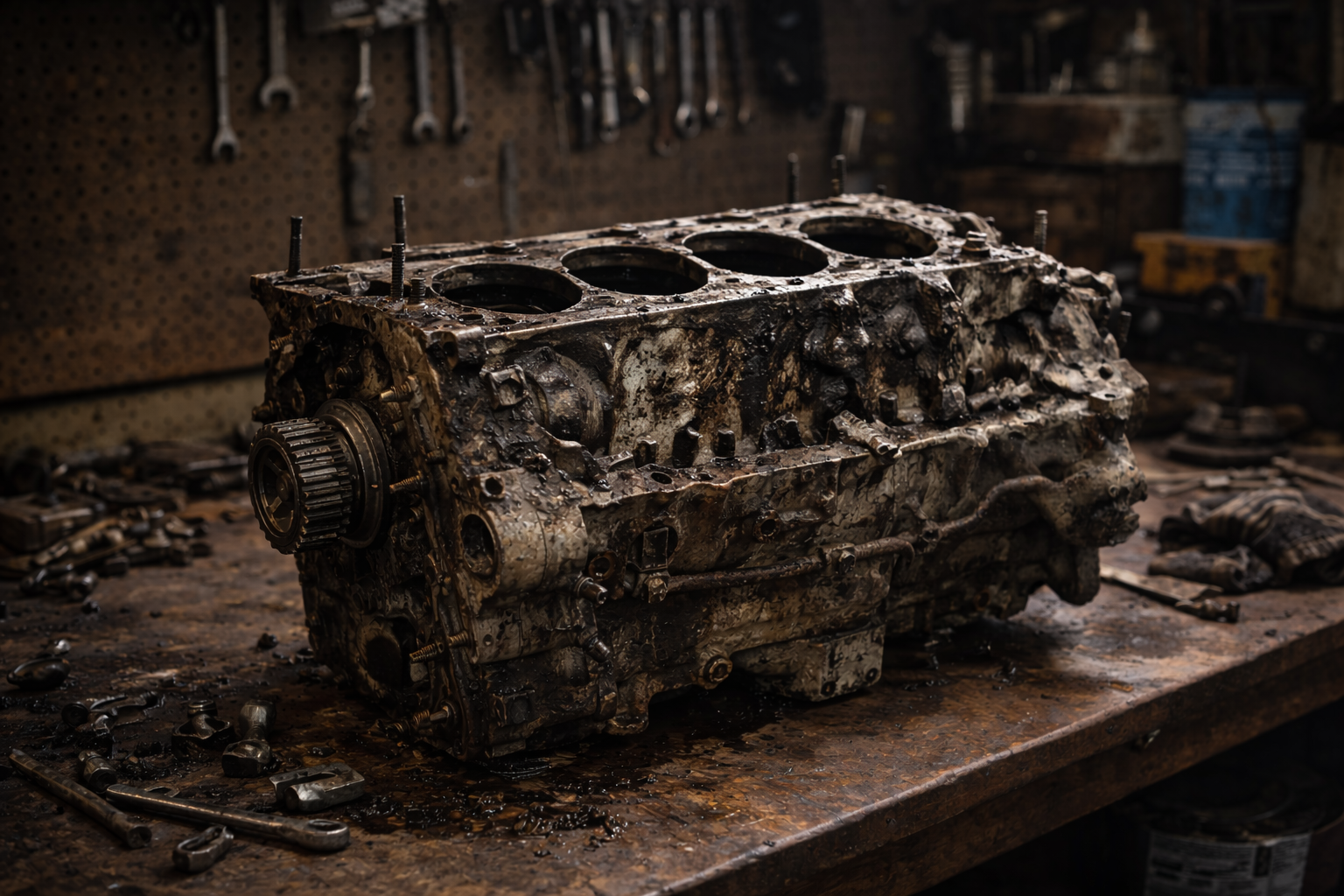
Knocking is different from ticking in a fundamental way: it usually means bearing surfaces are failing. The deep, rhythmic knock you feel as much as hear — especially under acceleration or load on the highway — is often a rod bearing or main bearing that's lost its oil film. Bearings are what keep your crankshaft spinning freely inside the engine. When they go, they go fast.

A rod knock ignored for too long becomes a thrown rod, which is exactly as bad as it sounds. The repair goes from a few hundred dollars to a full engine replacement in a single bad morning commute. Memphis summers accelerate this — heat thins oil faster, oil pressure drops, bearings run dry sooner. If you're hearing a knock, the right move is to get it diagnosed before you drive it again, not after.

The Rattle: Loose Things Moving

Rattling is usually a heat shield, an exhaust bracket, or a timing chain tensioner that's given up. Heat shields are the thin metal panels around your exhaust system — they expand and contract with temperature, and after enough Memphis summers they loosen from their mounts and start chattering. Annoying? Yes. Dangerous? Usually not immediately.

Timing chain rattle is the exception. If the rattle is coming from inside the engine and happens right at startup — a metallic chatter that settles down after a second — that's the timing chain tensioner failing to maintain tension. The timing chain keeps your engine's top and bottom halves synchronized. When it fails, it fails dramatically. This is a repair to schedule, not defer.

Why Memphis Heat Matters

Most engine noise guides are written for temperate climates. Memphis is not a temperate climate. When ambient temperatures stay above 90°F for months at a time and you're sitting in I-240 traffic with your engine idling at operating temperature, oil degrades faster, clearances run tighter, and any marginal component reveals itself sooner. Sounds that might be benign elsewhere tend to progress faster here.

If you changed your oil six months ago and you're hearing something new, the Memphis summer may have just accelerated what was coming. Get it looked at.

  • Fast, rhythmic tick that fades with warmth → likely low or old oil; get an oil change and re-evaluate
  • Persistent tick that doesn't fade → valve train issue; schedule an inspection
  • Deep knock under load → bearing failure likely; don't drive it, call us
  • Startup rattle that settles → timing chain tensioner; schedule soon, don't wait
  • Heat-shield rattle → annoying but usually not urgent; fix it before inspection time

Diagnostic appointments start at $89.95. We'll put it on the lift, listen to it ourselves, and tell you exactly what's making that sound and what it'll cost to fix — no guessing, no upselling.

Schedule online

call (901) 388-7390

Article by Sherry Snell

Sherry Snell

Sherry Snell is the owner and office manager of Snell Automotive, a family-owned auto repair shop serving Memphis since 1974. With over 30 years of experience, she oversees daily operations, customer relations, scheduling, and office management — ensuring every customer receives honest, reliable service. Known for her attention to detail and commitment to transparency and quality, Sherry is a trusted and familiar presence who plays a vital role in the continued success of Snell Automotive.

Snell Automotive

Get in Touch