
Schedule Service
Snell Automotive

Brakes, Steering & Suspension Problems: What Causes Them and When to Fix Them

A Practical Guide for Memphis Drivers

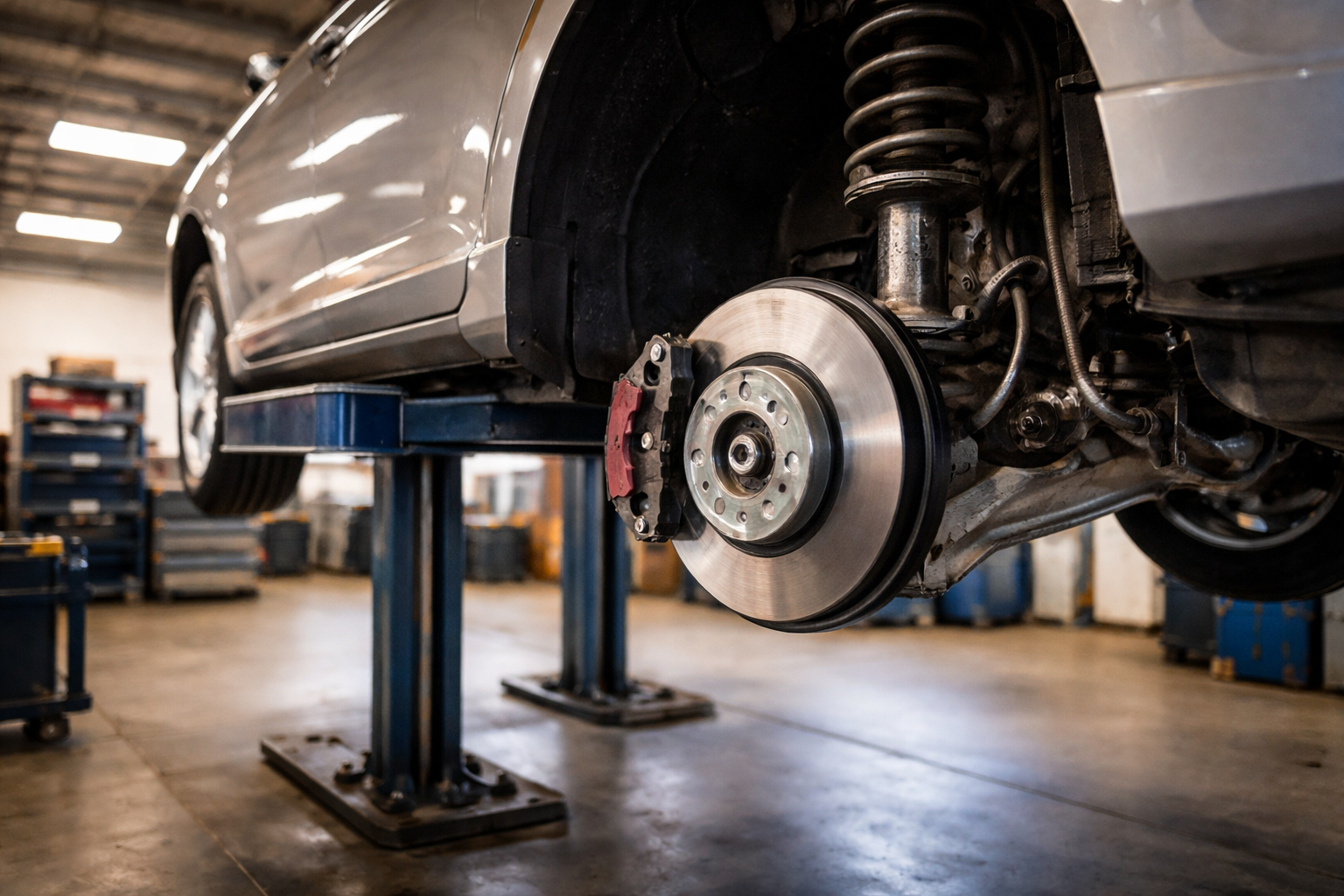
Your brakes, steering, and suspension are separate systems with separate components — but they share a job: keeping your vehicle stable, controllable, and stoppable. When one starts to fail, the others feel it. That's why the symptoms often don't point neatly to one system. A braking problem can look like a steering problem. A suspension problem can look like a tire problem. A steering problem can look like an alignment problem that keeps coming back.

Snell Automotive has been sorting through this overlap for Memphis drivers since 1974. This is a practical guide to what causes problems in each system, what the warning signs are, and when to act.

Brakes: What Goes Wrong and Why

Brake problems in Memphis have a specific character. Stop-and-go traffic on I-240 and I-40 keeps brakes working harder than highway driving. Summer heat — with road surface temperatures well above ambient — means brake components run hotter here than in cooler climates. The result is accelerated wear on pads, rotors, and brake fluid.

Worn brake pads are the most common service item. Pads typically last 30,000–70,000 miles depending on driving style, but Memphis stop-and-go shortens that range. The wear indicator squeals when you're down to the last few millimeters. Ignoring the squeal turns a $149–$249/axle pad replacement into a $299–$499/axle pad-and-rotor job.

Warped rotors produce the pulsing you feel through the brake pedal. Hard braking followed by holding the pedal on a hot rotor causes uneven thermal expansion. The fix is resurfacing or replacing the rotor — not something that resolves on its own.

Brake fluid contamination is invisible and underestimated. Brake fluid absorbs moisture from the air, and Memphis humidity accelerates that process. Contaminated fluid has a lower boiling point, which causes brake fade — pedal going soft — under repeated hard stops. A flush is part of any full brake service we do.

"In summer I'll see a car where the driver swears the brakes suddenly got worse. No noise, no obvious wear. Fluid test shows it's been boiling. Flush the fluid, bleed the system, and the pedal feel comes back. It's not dramatic, but it's real — and it's why I tell people brake fluid isn't forever."

Greg Baumgarten, Lead Technician — Snell Automotive, Memphis

Steering: Precision Depends on Worn Parts

Steering problems reveal themselves in how the car responds to your input — or fails to. The system runs from the steering wheel through the rack, through the tie rods, to the wheels. Play or wear anywhere in that chain shows up as vagueness, wandering, or a clunk when you turn.

Worn tie rod ends introduce play between the rack and the wheel. The steering has a dead zone — small movements of the wheel don't move the wheels. You compensate without realizing it, making slightly larger steering inputs. On I-240 at speed, this becomes fatiguing and, in a sudden maneuver, dangerous.

Power steering issues — either fluid-related in hydraulic systems or sensor-related in electric systems — manifest as increased steering effort or an inconsistent feel. Heavy steering that wasn't heavy before is worth a check.

Ball joint wear affects steering precision because ball joints connect the steering knuckle to the suspension. Play in the joint translates to imprecision in steering response, plus a clunk over bumps that drivers often attribute to something else.

Suspension: The Foundation Everything Else Depends On

Suspension is what keeps the tires on the road. When it fails, every other system's performance degrades — braking distance increases, steering precision decreases, tire life drops.

Shocks and struts wear gradually. The car bounces more over rough sections of Poplar or Summer Ave. Body roll in corners increases. The nose dips harder under braking. None of these changes are dramatic enough to flag on a single drive, which is why worn shocks often go unnoticed until they're significantly degraded.

Alignment drift is a natural consequence of Memphis road conditions. Every pothole impact puts force through the suspension geometry. Over time, the wheels are no longer pointing where they should. The car pulls, tires wear unevenly, and steering requires constant correction.

Worn sway bar links and bushings create a clunking noise on turns or over bumps — often confused with ball joint or tie rod noise. The sway bar controls body roll; when the links that connect it to the suspension wear, you get play and noise.

How These Systems Interact

A stuck brake caliper makes the car pull under braking. That pull stresses steering geometry. The alignment drifts. The tire wears unevenly. Now you have a brake problem, a steering problem, and a tire problem — from one stuck caliper.

Worn struts increase nose dive under braking, which reduces rear tire grip and extends stopping distance. Now you have a suspension problem that looks like a brake problem.

This is why diagnosing a pull, a noise, or handling degradation sometimes requires looking at all three systems, not just the one the driver noticed first. At Snell, a free inspection covers the whole car — we won't fix one system and leave another failing.

Warning Signs That Mean Act Now

  • Grinding brakes — metal on metal, pad friction material is gone
  • Soft or spongy brake pedal
  • Clunking from the front suspension over bumps
  • Loose or wandering steering at highway speed
  • Car pulling hard to one side under braking
  • Visible oil on the outside of a shock or strut body

Warning Signs That Mean Schedule Soon

  • Brake pad squeal (wear indicator, not morning rust)
  • Pulsing pedal under braking
  • Car drifting without hands on wheel
  • Increased bounce after hitting bumps
  • Steering wheel shimmy at highway speed
  • Uneven tire wear on one side

Pricing Reference

  • Free brake and suspension inspection
  • Brake pads (per axle): $149–$249
  • Pads + rotors (per axle): $299–$499
  • Struts (per pair): $349–$599
  • Wheel alignment: $89.95

If any of these warning signs match what you're experiencing,

Sources & Further Reading

schedule a free inspection or call (901) 388-7390. We've been doing this in Memphis for 50 years. We'll tell you what we find.

Article by Sherry Snell

Sherry Snell

Sherry Snell is the owner and office manager of Snell Automotive, a family-owned auto repair shop serving Memphis since 1974. With over 30 years of experience, she oversees daily operations, customer relations, scheduling, and office management — ensuring every customer receives honest, reliable service. Known for her attention to detail and commitment to transparency and quality, Sherry is a trusted and familiar presence who plays a vital role in the continued success of Snell Automotive.

Snell Automotive

Get in Touch