
Schedule Service
Snell Automotive

Low or Dirty Transmission Fluid: Why It Causes Big Problems

Transmission fluid is one of those things nobody thinks about until something goes wrong. It doesn't have a dashboard warning light that comes on reliably. There's no mileage sticker on your windshield reminding you to check it. And because transmissions tend to work quietly right up until the moment they don't, most Memphis drivers find out about fluid problems the hard way — when the shifting gets rough, or the car hesitates, or something starts slipping on the I-40 merge.

Here's what transmission fluid actually does, how to recognize when it's failing, and what it costs to fix it versus what it costs to ignore it.

What Transmission Fluid Is Actually Doing

Your transmission fluid is doing three things simultaneously: lubricating all the moving parts inside a very tight, very complex mechanical system; hydraulically actuating the clutch packs and bands that make your gear changes happen; and dissipating heat. That last one is particularly important in Memphis, where summer ambient temperatures push the operating temperature of your transmission fluid significantly higher than it was designed to sustain for extended periods.

When fluid breaks down — through heat, age, or contamination — all three functions degrade at once. Lubrication drops, hydraulic pressure becomes inconsistent, and heat builds up faster because degraded fluid can't carry it away as efficiently. The mechanical wear that follows is cumulative and largely irreversible.

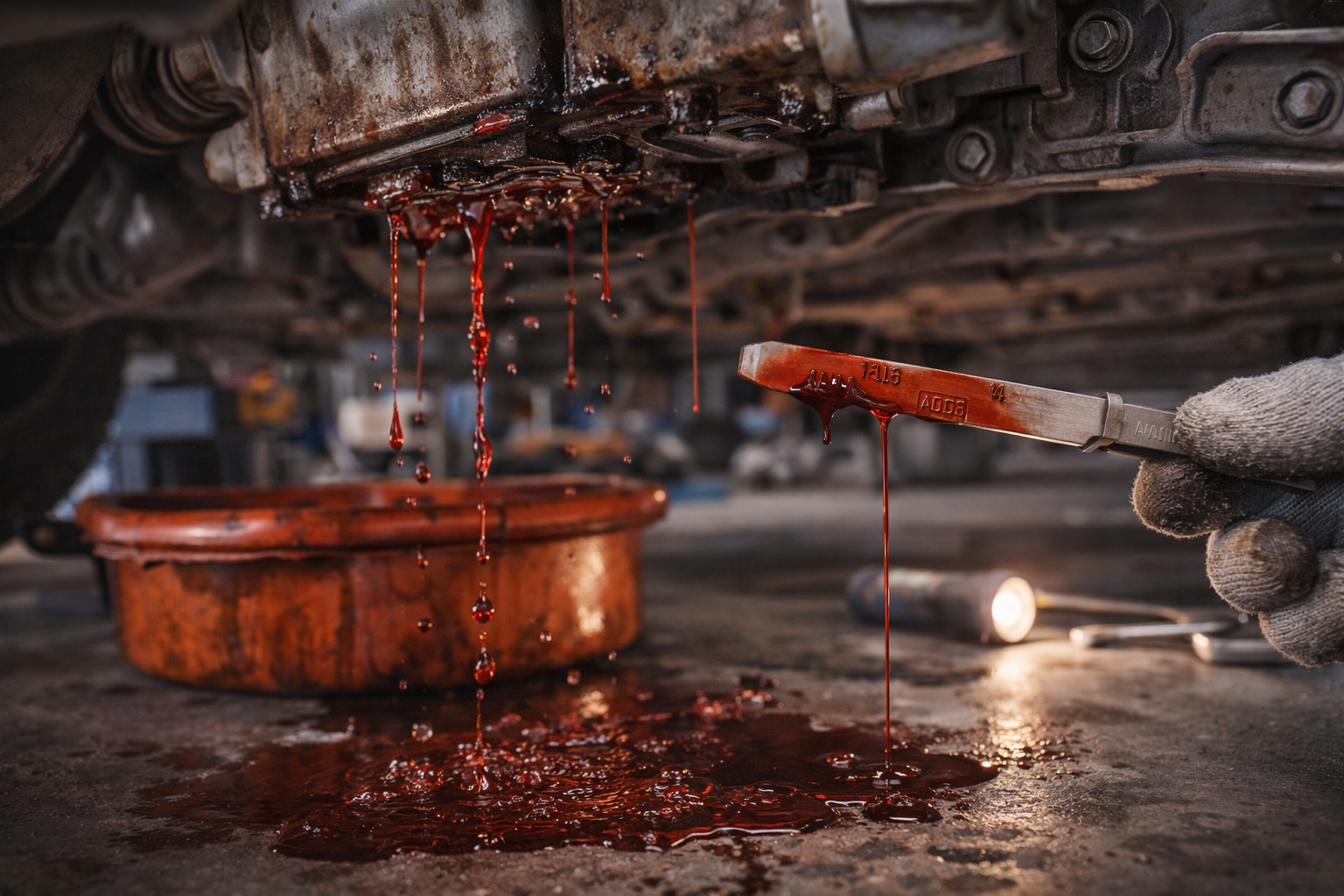
"I pull out dark, burnt-smelling transmission fluid and immediately know the car has been running hot for a while. Good fluid is red and nearly transparent. When it's brown or black and smells like something scorched, that's not just old fluid — that's fluid that's been cooking inside the transmission. Everything in there has been running in that environment."

Greg Baumgarten, Lead Technician — transmission diagnostics at Snell Automotive for 20+ years

Signs Your Transmission Fluid Is the Problem

Fluid problems tend to announce themselves through the feel of the transmission rather than dramatic failure. Watch for:

  • Delayed engagement — you put it in Drive or Reverse and there's a pause before the car moves
  • Rough or harsh shifts — gear changes that feel abrupt or clunky instead of smooth
  • Slipping between gears — the engine revs without a corresponding increase in speed
  • Whining or humming at certain speeds — fluid-related bearing noise that changes with speed
  • Fluid on the ground — transmission fluid is red; a red puddle under your car is not power steering fluid

Any of these symptoms mean the fluid condition or fluid level is affecting how the transmission operates. The longer they continue, the more mechanical wear accumulates.

Fluid Service vs. Flush: What's the Difference

A fluid drain-and-fill replaces the fluid in the pan — roughly 30–40% of the total system volume. A full flush cycles all the fluid through a machine that exchanges it completely, including what's in the torque converter and cooler lines. For most vehicles, a drain-and-fill every 30,000 miles is sufficient maintenance. A full flush is appropriate when the fluid is heavily degraded or when the vehicle hasn't had a service in a long time.

If you walk into a shop and they immediately recommend a flush on a vehicle with reasonably-maintained fluid and no symptoms, that's worth questioning. If your fluid is dark, burnt, or you're already experiencing symptoms, a flush makes sense and we'll tell you why.

What Happens If You Wait

Transmission fluid problems exist on a spectrum. Catching degraded fluid before symptoms appear means a service call. Catching it when you're experiencing rough shifts means a service plus possibly a valve body inspection. Waiting until the transmission slips badly or stops holding gear means you're in rebuild territory — and in Memphis, transmission rebuilds run $1,800–$3,500 depending on the vehicle and the extent of internal damage.

The fluid service that would have prevented it costs a fraction of that. This is the clearest cost-benefit calculation in automotive maintenance.

Our diagnostic fee is $89.95, and if the problem is fluid, we'll know quickly.

Schedule a transmission inspection

call (901) 388-7390

— we're at 2848 Appling Way in Memphis.

Article by Sherry Snell

Sherry Snell

Sherry Snell is the owner and office manager of Snell Automotive, a family-owned auto repair shop serving Memphis since 1974. With over 30 years of experience, she oversees daily operations, customer relations, scheduling, and office management — ensuring every customer receives honest, reliable service. Known for her attention to detail and commitment to transparency and quality, Sherry is a trusted and familiar presence who plays a vital role in the continued success of Snell Automotive.

Snell Automotive

Get in Touch