The battery is the reservoir — it stores chemical energy and converts it to electrical power. It starts the car, runs electronics when the engine is off, and smooths out voltage spikes in the electrical system while the engine runs. Batteries don't generate power; they store it and release it.
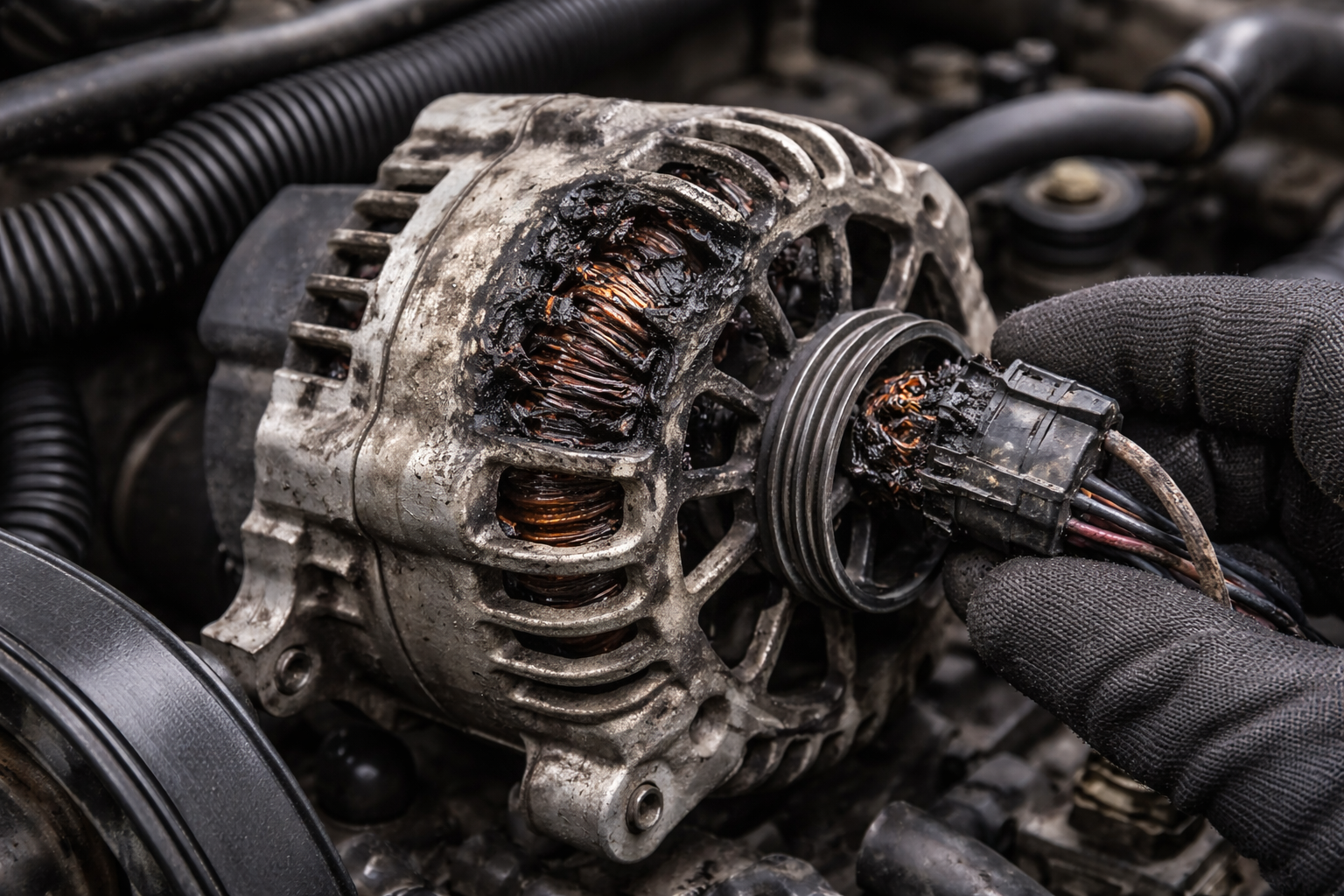
The alternator is the generator — driven by a belt off the engine, it produces the AC current that gets converted to DC and used to charge the battery and run the car's electrical systems while the engine is running. If the alternator fails, the car runs entirely on battery reserve. Depending on how many electronics are active, that reserve lasts 20 to 45 minutes.
The starter is the motor — it draws a massive burst of current from the battery to spin the engine fast enough for combustion to begin. It's only active for the two seconds it takes to start the car, but those two seconds demand more current draw than almost anything else in the vehicle.