
Schedule Service
Snell Automotive

Loose Steering or Clunking Noises? Tie Rod and Ball Joint Problems Explained

There's a moment Memphis drivers know: you hit a pothole on Summer Ave and something underneath goes clunk. Not a tire noise. Not a road surface noise. Something structural. You feel it through the steering wheel. You wonder if you imagined it. You probably didn't.

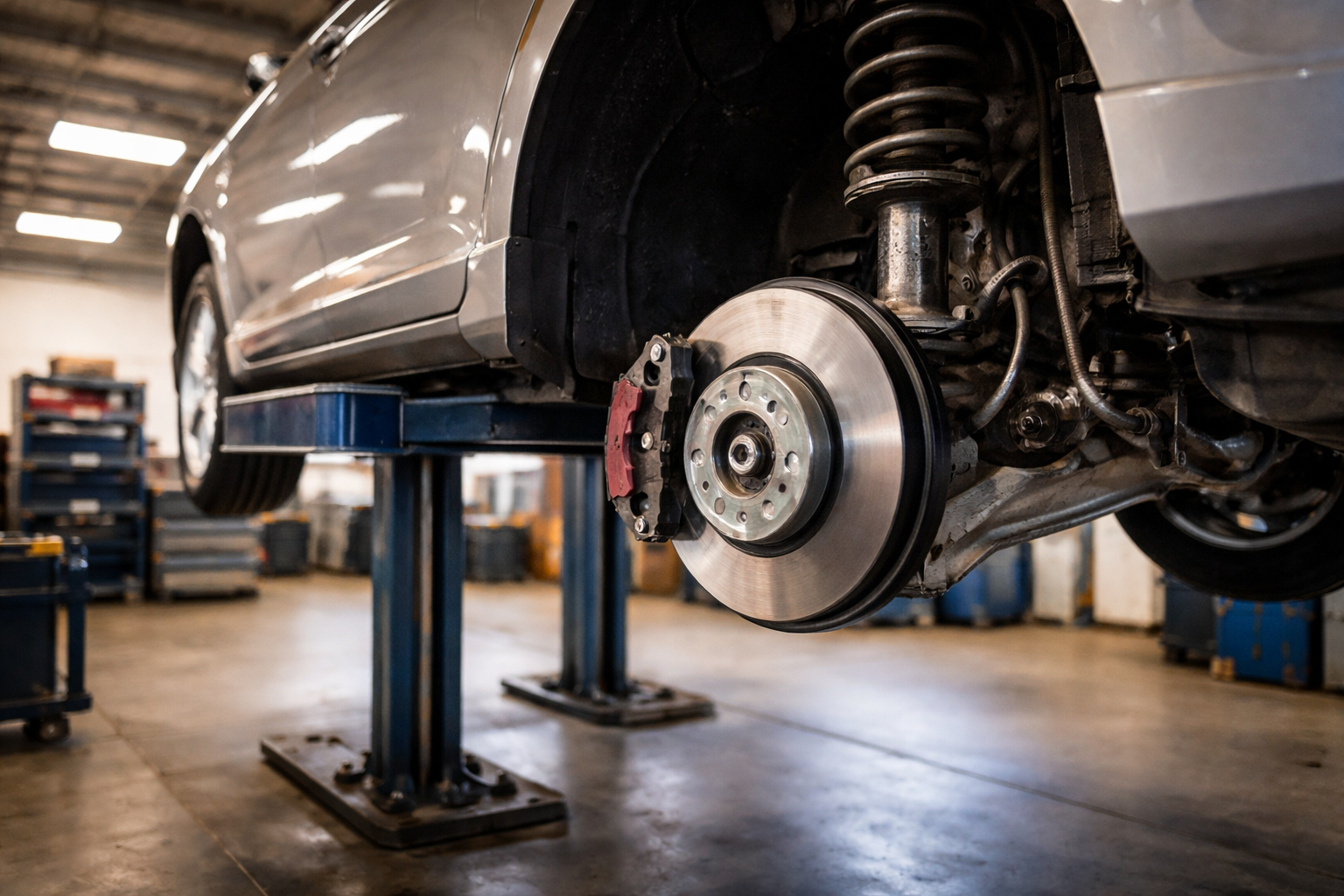
Tie rods and ball joints are the pivot points of your steering and suspension — the joints that let the wheels turn when you do, and absorb road impact without letting the wheel wander. When they wear, the car tells you. The signs are specific enough that a technician can narrow it down before the car goes on the lift.

What These Parts Actually Do

Ball joints connect the control arm to the steering knuckle. They're the pivot point that lets the wheel move up and down with the road surface while still turning left and right with the steering. A healthy ball joint has almost no play — the wheel moves where you put it and stays there.

Tie rods connect the steering rack to the steering knuckle. When you turn the wheel, the rack pushes or pulls the tie rod, which rotates the wheel. Inner tie rods are closer to the rack; outer tie rods connect to the knuckle. Both can wear, and both produce different symptoms depending on how far gone they are.

"Ball joints and tie rods fail differently. Ball joints usually give you a clunk first — you'll feel it through the floor over bumps. Tie rods more often give you a loose, wandering feel in the steering before you get the noise. If you're chasing the wheel to keep it straight on the highway, start with the tie rods."

Greg Baumgarten, Lead Technician — 20+ years diagnosing Memphis suspensions

The Symptoms, Specifically

Clunking or knocking over bumps is the most common ball joint symptom. Hit a speed bump or a pothole and you hear/feel a knock from the front of the car. It's distinct from the general road noise — it's rhythmic and localized to one corner. Early stage: only over sharp impacts. Later stage: over any road irregularity.

Loose or wandering steering is the signature tie rod symptom. The car doesn't track straight. You find yourself making small corrections constantly to keep it in the lane. On I-40 at 70 mph this is tiring and dangerous. Worn tie rods introduce play between the rack and the wheel, so there's a dead zone where turning the steering wheel produces no wheel movement.

Vibration in the steering wheel can come from either component. Worn outer tie rods often produce a shimmy at highway speed, especially after a suspension impact. Ball joint wear can cause a vibration that worsens on turns.

Uneven tire wear is the hidden consequence. A worn tie rod changes toe geometry — the wheel points slightly inward or outward — and the tire feathers. A worn ball joint changes camber — the wheel tilts — and the tire wears on one edge. You might replace tires thinking they wore out normally, not realizing the suspension is destroying the next set too.

Pulling to one side under normal driving (not just braking) often points to a tie rod issue on that side. If the geometry is off on the left, the car biases left. Sometimes mistaken for an alignment problem — and it is, in a sense, but you can't fix alignment without fixing the worn joint first.

Why Memphis Roads Accelerate This

Ball joints and tie rods are rated for a service life that assumes normal road surface variation. The stretch of Poplar between Highland and East Parkway doesn't count as normal. The repeated sharp impacts from potholes and uneven patches put impulse loads through these joints that their grease seals weren't designed for repeatedly. Once the seal cracks, contaminants get in, and wear accelerates fast.

This is why we often see these components fail on Memphis vehicles well before national average mileage — 40,000–60,000 miles rather than 80,000–100,000.

The Safety Concern

A worn ball joint doesn't fail slowly. When the ball finally separates from the socket, the wheel collapses inward. At speed, the car drops to the pavement on one corner. Control is lost immediately. This isn't a "drive carefully until you get it fixed" situation. NHTSA includes ball joint failure in its documentation on sudden loss-of-control events.

Tie rod failure is similarly abrupt. If the outer tie rod separates, the wheel is no longer connected to the steering system. The car will veer hard to one side.

When we see significant play in either component, we say so clearly. We won't tell you it's fine when it isn't.

What Repair Costs

  • Free inspection — we'll put it on the lift and check for play
  • Tie rod ends (outer, per side): typically included in alignment cost plus parts
  • Ball joints: varies by vehicle; ask for a quote after inspection
  • Wheel alignment (required after any steering/suspension repair): $89.95

If something clunked or the steering doesn't feel right,

Sources & Further Reading

schedule a free inspection or call (901) 388-7390. We'll tell you what we find.

Article by Sherry Snell

Sherry Snell

Sherry Snell is the owner and office manager of Snell Automotive, a family-owned auto repair shop serving Memphis since 1974. With over 30 years of experience, she oversees daily operations, customer relations, scheduling, and office management — ensuring every customer receives honest, reliable service. Known for her attention to detail and commitment to transparency and quality, Sherry is a trusted and familiar presence who plays a vital role in the continued success of Snell Automotive.

Snell Automotive

Get in Touch