
Schedule Service
Snell Automotive

Why Your AC, Heat, or Climate Controls Stop Working Properly

Memphis summers are not subtle. When the temperature hits 96°F on the drive home from Germantown to Midtown and your A/C suddenly starts blowing warm air, you're not dealing with a minor inconvenience — you're dealing with a car that may be genuinely unsafe to drive until it's fixed. Climate control failures frustrate drivers because the symptoms are inconsistent: the system works fine in the morning, fails in afternoon traffic on I-240, then mysteriously recovers overnight.

That inconsistency isn't a sign that nothing is wrong. It's almost always a sign that something electrical is wrong — and intermittent electrical faults get worse under heat stress. What feels like a random glitch is the car's way of telling you a component is starting to fail.

What Actually Controls Your Climate System

Modern climate control isn't a simple on/off switch anymore. A mid-2010s or newer vehicle has an HVAC control module — essentially a dedicated computer — that talks to your main engine control unit, monitors cabin temperature sensors, blend door actuator positions, and fan motor speed. The compressor clutch is engaged by a relay controlled by software logic. The blend doors that mix hot and cold air are moved by small electric motors called actuators.

When any link in that chain breaks — a bad actuator, a failed relay, a corroded connector, a faulty temperature sensor — the module either commands the wrong output or throws a fault code and defaults to a safe state. "Safe state" often means maximum heat or maximum cold, which is why you sometimes get stuck with one extreme and no adjustment.

The Memphis Factor: Heat Breaks Plastic

Blend door actuators are small plastic gears with a DC motor inside. They cycle every time you adjust your temperature. In a climate where the cabin of a parked car routinely exceeds 140°F in July, those plastic gears become brittle faster than the manufacturer ever designed for. Snell sees failed actuators frequently in vehicles between 7–10 years old that have spent their lives in Memphis — vehicles that would have years of life left in them in a cooler climate.

The failure mode is often a clicking or grinding sound near the dashboard when you change the temperature setting, or a "stuck at one temperature" complaint. Sometimes the actuator fails silently — no noise, just no movement, and the system defaults to whatever position the door was in when the motor died.

"I've had customers come in convinced their compressor was shot because they were only getting heat. Nine times out of ten it's a $150 actuator, not a $900 compressor. The diagnostic tells us exactly which motor stopped responding before we start pulling anything apart."

Greg Baumgarten, Lead Technician — on blend door failures in Memphis heat

Common Climate Control Electrical Problems

These are the failures we diagnose most frequently in the Snell shop — listed not by how dramatic they sound but by how often we actually see them:

  • Blend door actuator failure — stuck at heat or cold, clicking from behind the dash, no airflow direction control
  • Blower motor resistor failure — fan only works on one speed (usually high), or stops working entirely except at max
  • HVAC control module fault — erratic behavior, unresponsive controls, climate system that resets itself
  • Compressor clutch relay — A/C doesn't engage, compressor cycling on and off rapidly
  • Refrigerant pressure sensor — system refuses to run the compressor because it can't verify safe pressure
  • Evaporator temperature sensor — system shuts off prematurely to prevent freeze-up that doesn't actually need preventing
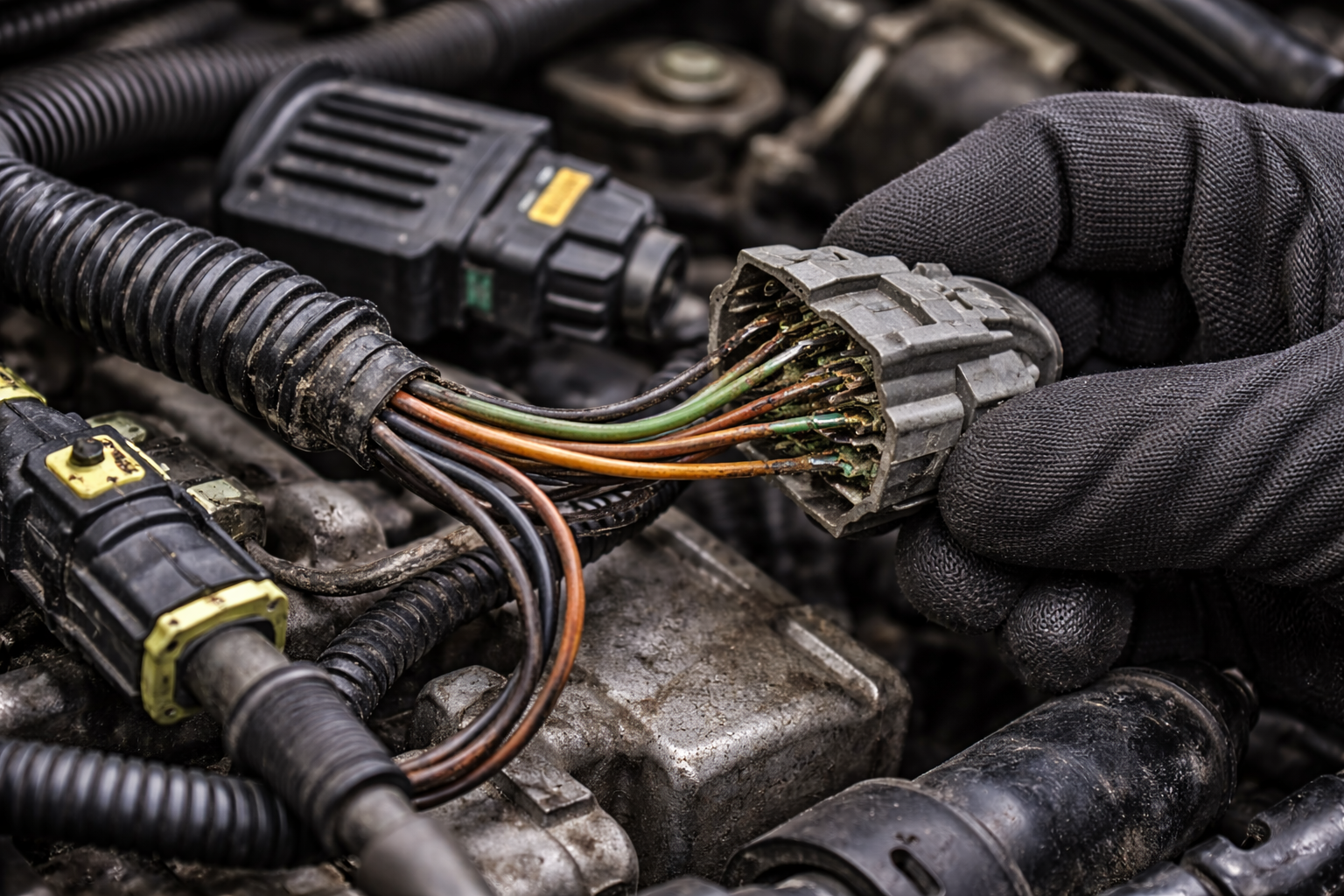
  • Corroded connectors at the firewall — moisture from Memphis humidity gets into multi-pin connectors and causes partial short or open circuits

What a Proper Diagnosis Looks Like

A climate control complaint deserves more than a refrigerant recharge. The first step is a diagnostic scan — not just reading codes, but reviewing live data: what temperature are the cabin sensors reporting, what position is each actuator commanded to, is the compressor clutch receiving a signal. Our diagnostic fee is $89.95, applied toward your repair when you proceed. That scan tells us in 20 minutes what would take an hour of guessing without it.

If the module is logging actuator faults, we test the actuator mechanically before condemning it — sometimes the actuator is fine and the fault is a corroded connector upstream. If the compressor isn't engaging, we verify the refrigerant charge before assuming a relay or clutch failure. The diagnostic process is a flowchart, and we follow the whole thing rather than skipping to the most expensive branch.

What Repairs Cost

Blend door actuator replacement runs $180–$320 depending on which actuator and how buried it is behind the dashboard. Blower motor resistors are $80–$150 parts-and-labor — a quick job. Blower motor replacement itself runs $200–$350. HVAC control module replacement varies widely by vehicle: $250–$600, and some require programming after installation. Our labor rate is $95/hr.

A refrigerant recharge with leak check runs $129–$189. If you have a leak, we find the source before we charge it — otherwise you're cooling the shop parking lot, not your car.

Don't Wait on This in Memphis

A climate control problem in January is an annoyance. The same problem in August, driving the kids home from Shelby Farms in 97°F heat with humidity making it feel like 105°F, is a health risk. Heat-related illness happens fast in enclosed spaces. If your A/C is acting up, get it checked before summer peaks.

Schedule a climate system diagnostic or call (901) 388-7390 — we're on Appling Way, open Monday through Friday, 8 to 5.

Sources & Further Reading

Article by Sherry Snell

Sherry Snell

Sherry Snell is the owner and office manager of Snell Automotive, a family-owned auto repair shop serving Memphis since 1974. With over 30 years of experience, she oversees daily operations, customer relations, scheduling, and office management — ensuring every customer receives honest, reliable service. Known for her attention to detail and commitment to transparency and quality, Sherry is a trusted and familiar presence who plays a vital role in the continued success of Snell Automotive.

Snell Automotive

Get in Touch