Synthetic vs Conventional Oil: What Memphis Drivers Should Choose
Heat, Traffic, and Real-World Driving in the Mid-South
Walk into any auto parts store and the oil aisle will tell you the choice is simple: conventional is the budget pick, synthetic is premium. That framing isn't wrong, but it's incomplete. The real question isn't about price—it's about what your engine actually needs given where you drive. In Memphis, the answer to that question is usually more decisive than it is in most other cities.
We've been changing oil in Memphis since 1974. The Mid-South driving environment—sustained summer heat, heavy stop-and-go traffic, lots of short trips—is one of the harder environments for motor oil in the country. What works fine for a driver in a temperate climate making long highway runs may not be the right call here.
What Makes Synthetic Different
Conventional motor oil starts as crude oil, refined and blended with additives. Synthetic oil is engineered from the base molecules up—designed for consistent viscosity across a wider temperature range, better resistance to oxidation, and longer useful life under stress. The molecular uniformity of synthetic oil means it flows more easily in cold starts and holds its protective film more reliably at high temperatures.
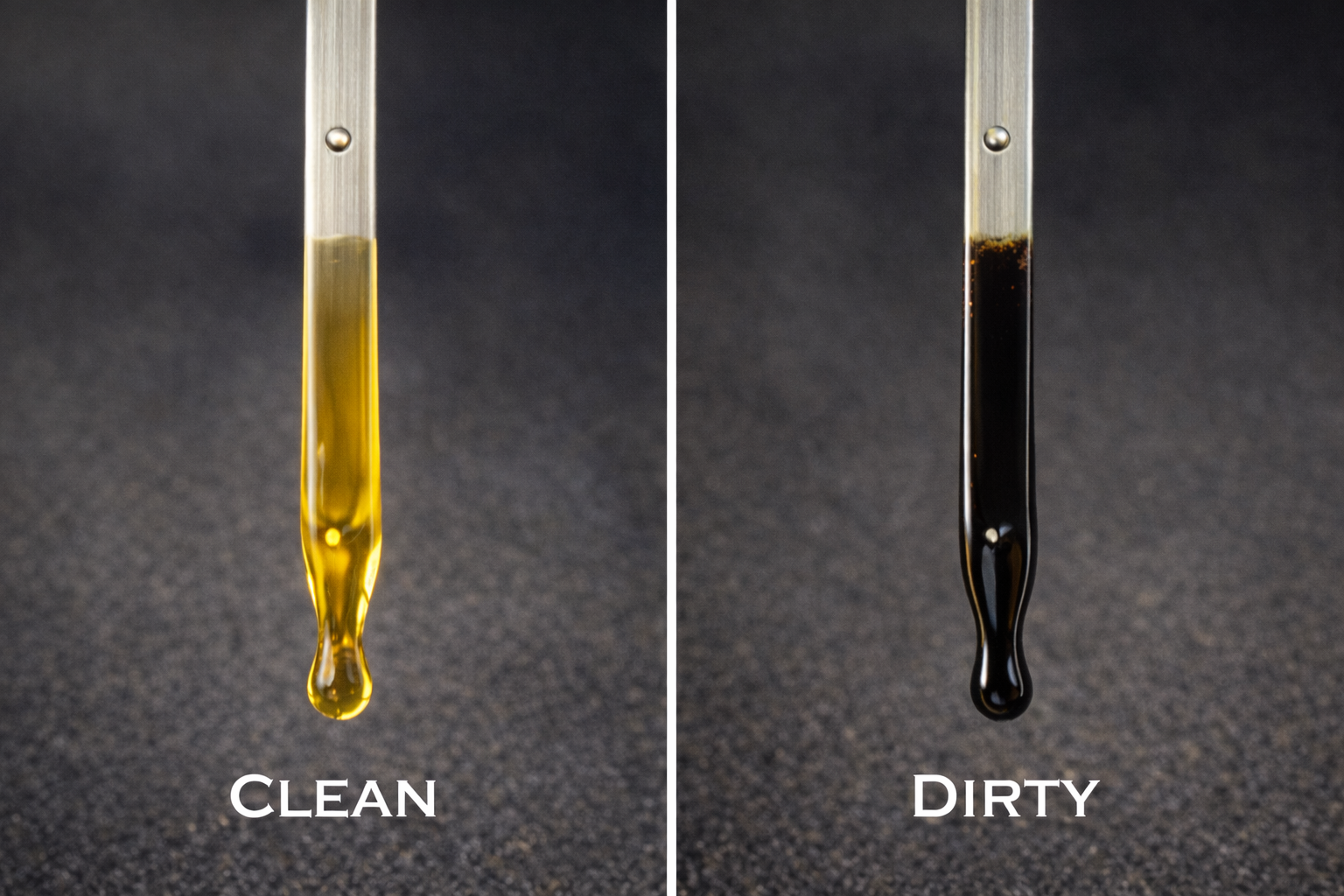
That last part matters a lot in Memphis. Engine compartment temperatures in a Memphis summer can reach 250°F or higher. Conventional oil at those temperatures oxidizes faster, thickens, and loses its lubricating properties. Full synthetic is engineered to stay stable at temperatures that would accelerate conventional oil's breakdown.
"I've been pulling dipsticks on Memphis engines for twenty years. Conventional oil after a Memphis summer looks and smells noticeably more degraded than synthetic at the same interval. If someone tells me they drive in Memphis heat with a lot of stop-and-go, I'm recommending synthetic every time."
The Memphis Case for Synthetic
Memphis driving hits several conditions that manufacturers classify as "severe service"—the category that warrants more frequent oil changes and, in many cases, a more robust oil formulation:
Ambient temperatures above 90°F for extended periods
Frequent short trips (under 5 miles) that don't fully warm the engine
Prolonged idling in traffic on I-40, I-240, and Poplar Avenue
Dusty or humid operating conditions
Full synthetic handles all of these better than conventional. It's not that conventional oil is bad—it's that Memphis conditions push oil harder than most drivers realize, and synthetic has more capacity to handle that stress without breaking down.
When Conventional or Synthetic Blend Makes Sense
Not every Memphis driver needs full synthetic. A synthetic blend ($54.95) hits a reasonable middle point for drivers with newer vehicles, moderate mileage, and mixed driving that includes some highway time. If you're driving a newer vehicle, keeping up with your intervals, and not doing a lot of short-trip city driving, a blend may serve you well.
Conventional oil ($39.95) still makes sense in a few specific situations: older vehicles that were designed for conventional, engines with high mileage that have been on conventional their whole lives and are stable, and drivers who change oil very frequently and don't need the extended life that synthetic provides. That said, the price difference between conventional and synthetic is roughly $30. Spread across a 6-month interval, that's less than $5 a month in extra protection—a reasonable trade in Memphis heat.
What Snell Recommends
For most Memphis drivers—especially those with vehicles under 10 years old, those driving in heavy city traffic, or those operating during summer months—full synthetic is the better choice. Consumer Reports' long-term testing consistently shows synthetic oil maintaining better engine protection across a wider range of conditions, and that advantage is more pronounced in high-heat, short-trip driving.
If you're unsure which oil is right for your vehicle, tell us your make, model, mileage, and how you typically drive. We'll give you a straightforward answer—not whatever costs more, but what your engine actually needs for Memphis conditions.
The Memphis Climate Factor
Oil viscosity — how thick or thin the oil is at operating temperature — determines how well it protects your engine. Conventional oil starts breaking down and thinning when it's consistently exposed to temperatures above 200°F. In a Memphis summer, engine oil temperatures routinely hit 220°F–240°F in stop-and-go traffic. That's the range where conventional oil's molecular structure starts degrading.
Synthetic oil is engineered to resist thermal breakdown at these temperatures. Its uniform molecular structure means it maintains viscosity across a wider temperature range — from cold January mornings at 25°F to August afternoons when your engine bay is radiating 250°F. For a Memphis engine, that stability translates directly to better protection during the 4–5 months per year when ambient temperatures exceed 90°F.
The price difference at Snell is $30 — $39.95 for conventional vs. $69.95 for full synthetic. Over a year with two oil changes, that's $60 for measurably better engine protection during the hardest months of Memphis driving.
Sherry Snell is the owner and office manager of Snell Automotive, a family-owned auto repair shop serving Memphis since 1974. With over 30 years of experience, she oversees daily operations, customer relations, scheduling, and office management — ensuring every customer receives honest, reliable service. Known for her attention to detail and commitment to transparency and quality, Sherry is a trusted and familiar presence who plays a vital role in the continued success of Snell Automotive.