
Schedule Service
Snell Automotive

Why Your Car Pulls Left or Right When Driving or Braking

You notice it first on the interstate. Your hands are loosely on the wheel, the lane is straight, and the car drifts. You correct without thinking. A few miles later, you realize you've been fighting it the whole way. That pull — even subtle, even gradual — is a diagnostic signal. It's telling you which system is off balance.

At Snell Automotive, a car that pulls is one of the most common complaints we hear. It's also one of the most variable to diagnose, because several different systems can cause the same symptom. Here's how to read the difference.

Pull That Happens All the Time

If the car pulls consistently while driving — not just when braking, not just in certain conditions, but always — the most likely causes are alignment or a tire issue.

Alignment is the first suspect. Memphis roads knock alignment out of spec faster than most cities. The potholes on Poplar, the frost heaves on Summer Ave in late winter, the utility-cut patches throughout Midtown — every hard impact puts force through the suspension geometry. Alignment drift doesn't feel dramatic at first, but the cumulative result is a car that biases to one side. A $89.95 alignment check is the fastest way to rule this in or out.

Tire pressure discrepancy between the left and right tires will cause a pull toward the lower-pressure side. This is worth checking before spending money on anything else. If one front tire is running 5 PSI low, the car will pull. If the pressure equalizes and the pull stops, you've saved yourself a diagnostic visit.

Tire conicity — a manufacturing defect where the tire's belts are slightly off-center — causes a consistent pull in one direction that doesn't go away with alignment. Swapping the front tires side-to-side changes the pull direction if this is the cause.

"When a car pulls, the first question I ask is: does it pull more when you brake, or all the time? That one question cuts the diagnostic in half. Brake pull points to the braking system. Constant pull points to alignment, tires, or suspension geometry. Different systems, different approach."

Greg Baumgarten, Lead Technician — Snell Automotive, Memphis

Pull That Happens Only When Braking

Braking pull is a different problem with a different cause. When you press the brake pedal and the car dives to one side, the braking force is not being applied symmetrically — one side is stopping harder than the other.

A sticking caliper is the most common cause. If one caliper is applying partial pressure even before you press the pedal, that wheel is already braking slightly. When you add full brake pressure, it brakes significantly more than the opposite side. The car yanks toward the stuck side.

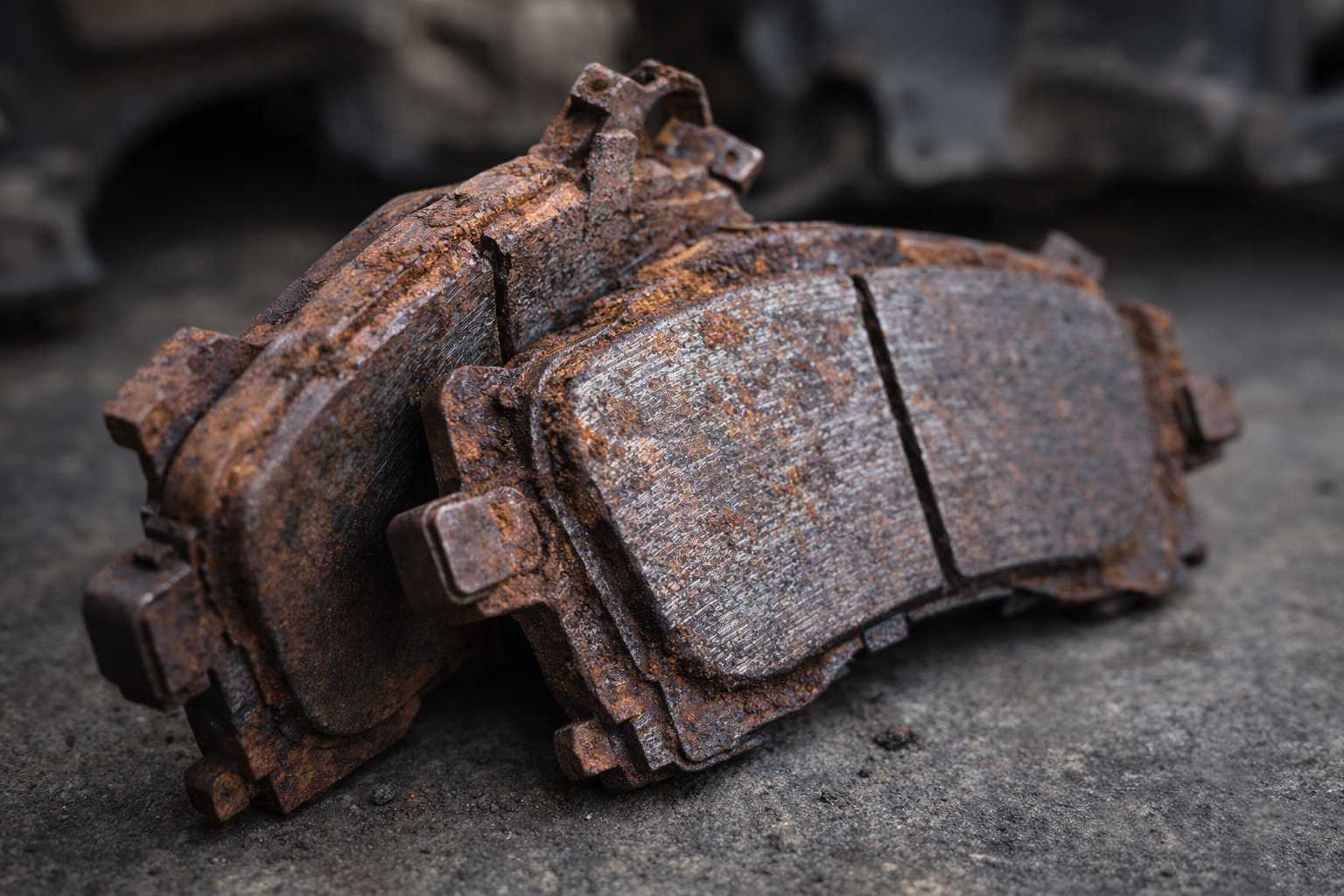
Uneven pad wear between sides produces a similar effect — one set of pads has more friction material than the other, so braking force is asymmetric. This often means the caliper on the worn side has been sticking for some time.

A collapsed brake hose is less common but more serious. The rubber hose that delivers hydraulic pressure to the caliper can degrade internally, creating a one-way valve effect: pressure gets to the caliper but can't release. The brake drags on one side. The car pulls, and that corner runs hot.

Pull That Changes with Speed or Road Conditions

If the pull is inconsistent — worse at certain speeds, changes direction over bumps, or appears and disappears — suspension components are more likely involved.

A worn ball joint or tie rod on one side changes steering geometry dynamically. The car may track straight on smooth pavement and pull noticeably over rough surface. This is because the worn joint has play — it stays in one position under low load but shifts under impact.

Worn wheel bearings can also produce a pull that varies with speed. On I-240 at 70 mph, a failed bearing produces a hum and a pull that changes as you shift lanes and load different sides of the bearing.

What We Check

A free inspection at Snell covers the likely causes in order of probability:

  • Tire pressure and condition
  • Brake caliper function and pad wear
  • Alignment angles
  • Ball joint and tie rod play
  • Wheel bearing condition

We tell you what we find. We don't assume you need the most expensive fix.

What It Costs to Fix

  • Wheel alignment: $89.95
  • Brake pads (per axle): $149–$249
  • Pads + rotors (per axle): $299–$499
  • Caliper rebuild or replacement: varies by vehicle

If your car is pulling and you're tired of fighting the wheel,

Sources & Further Reading

schedule a free inspection or call (901) 388-7390. We'll find which system is causing it.

Article by Sherry Snell

Sherry Snell

Sherry Snell is the owner and office manager of Snell Automotive, a family-owned auto repair shop serving Memphis since 1974. With over 30 years of experience, she oversees daily operations, customer relations, scheduling, and office management — ensuring every customer receives honest, reliable service. Known for her attention to detail and commitment to transparency and quality, Sherry is a trusted and familiar presence who plays a vital role in the continued success of Snell Automotive.

Snell Automotive

Get in Touch